

Sideboards: Storage for the Dining Room, Living Room and Hall
A sideboard is the piece that decides whether a dining room works. It is the only long, deep case piece most homes ever buy, and it holds what the table cannot: plates and glasses, linen, the dishes waiting for the next course, and in a living room the equipment nobody wants to look at. Casa Padrino, one of the leading international specialists for luxury furniture, supplies solid timber sideboards, hand painted baroque pieces and low contemporary units, with close to a hundred models in the English catalogue, delivered worldwide.
This is a very large search term, and the volume chains hold it on price. We do not compete there. What follows is about craft, timber and proportion: how a case piece is built, what it will carry, and whether it fits the wall it was bought for. The measurement section is the longest here on purpose, because sideboards are sent back over centimetres, not over taste.
Where the sideboard comes from
The sideboard is an English invention and younger than most people assume. Through the seventeenth century food was served from a plain side table, and the dining room became a room of its own only during the eighteenth. Robert Adam is credited with the arrangement that started it: a serving table against the wall with a tall pedestal at each end, one fitted for warming plates, the other lined with lead to hold water for rinsing.
In the 1780s London cabinetmakers pushed the three parts together into a single case with drawers and cupboards under one long top. George Hepplewhite published the result in the Cabinet Maker and Upholsterer Guide of 1788, and the form spread quickly because it solved a real problem: everything for the meal had to be within one arm span of the table. One deep drawer was usually a cellaret, lined for bottles, the ancestor of the drinks cupboard people still expect.
The Victorians made it monumental, with a tall mirrored back, carved panels and a marble top. The twentieth century turned the idea inside out: low, long and unbroken, without the mirror, and moved into the living room. Both ancestors survive in the catalogue.
Sideboard, commode, credenza or display cabinet
The vocabulary is used loosely across the market. The working definitions:
- Sideboard. A long, low case piece, usually 150 to 220 cm wide and 40 to 50 cm deep, mixing doors and drawers under a usable top, made to be worked from while standing.
- Commode or chest of drawers. Taller than it is wide, drawers rather than cupboards, traditionally a bedroom piece. Our commodes overlap with sideboards in style but almost never in proportion.
- Credenza. Italian, and originally a serving table. The word is the Italian for trust, generally traced to the practice of tasting a dish before it was served. Today it means a sideboard with plain cupboard doors.
- Buffet. The French term for the same piece, and in hospitality it has kept its literal meaning: the case food is served from.
- Display cabinet or vitrine. Glazed and tall, made to show what is inside rather than hide it. Those formats sit under cabinets.
- Console table. Shallow, open underneath, decorative rather than storage. Where the piece only has to carry keys and a lamp, our page on entryway console tables covers that form instead.
In practice the line is depth. Under about 35 cm a piece is a console and will not hold a dinner service; over about 50 cm it crowds the room. The sideboard lives in between.
The dining room: what the piece was made to do
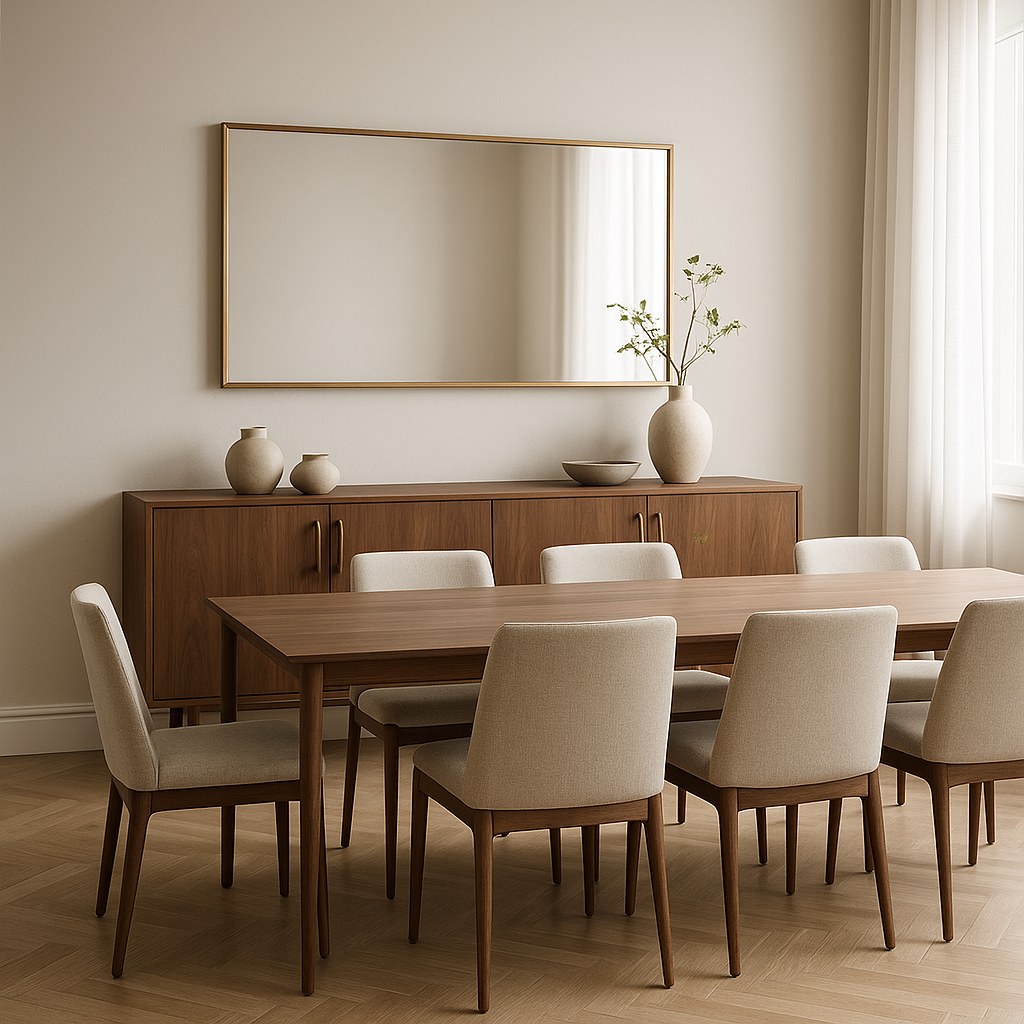
In a dining room a sideboard has three jobs that pull against each other: it stores, it serves, and it finishes the wall. Storage wants drawers packed tightly, serving wants a clear top at working height, and the wall wants symmetry.
The usual solution is to divide the piece horizontally. Top drawers take cutlery and table linen, the cupboards below what is used a few times a year: platters, the tureen, the candlesticks. The top stays as empty as discipline allows, because once it is permanently covered it stops being a serving surface.
Above it, a mirror is the classical answer and still the best one: it doubles candlelight and makes a narrow room read wider. Ours sit in mirrors, the carved and gilded frames under baroque mirrors. The sideboard should belong to the table rather than match it: identical timber and finish across dining tables, chairs and case reads as a shop display, while a shared tone with a different grain reads as a room that grew.
The living room: the sideboard as a media unit
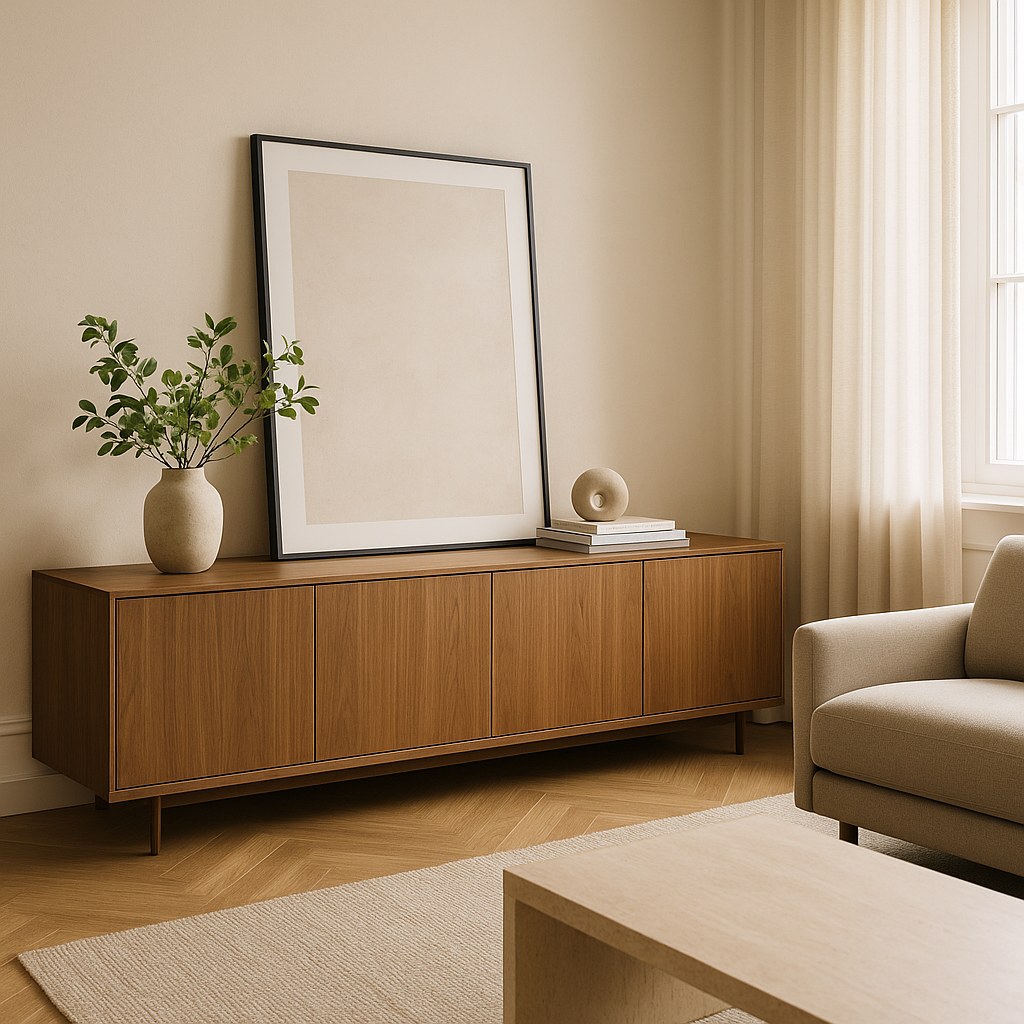
The second life of the sideboard is as the piece that holds the television, which is why low, long models sell as they do. The requirements change completely: the height that suits serving is wrong for viewing, ventilation matters, and cables have to leave the case somewhere.
Three things are worth checking before ordering. Whether the back panel has a cable opening, since a solid back means a visible loop over the top or drilling into a finished piece. Whether a closed cupboard will hold equipment that runs warm, which belongs behind an open shelf. And whether the doors clear what stands in front of them, since a sofa close to the wall can block a hinged door.
A long case gives a living room a horizontal line that steadies everything around it, which is why it works below a large picture and opposite a group of sofas. Lamps at each end give it symmetry; those sit under chandeliers, wall lights and table lamps.
Hall, entrance and hotel service
In a hall the sideboard absorbs what otherwise covers every surface in the house: gloves, dog leads, post, the parcel waiting to go back. A hall piece wants drawers rather than deep cupboards, because a deep cupboard in a hall is where things get lost, and a top hard enough to take keys thrown onto it. The constraint is the corridor, and depth decides it, not length.
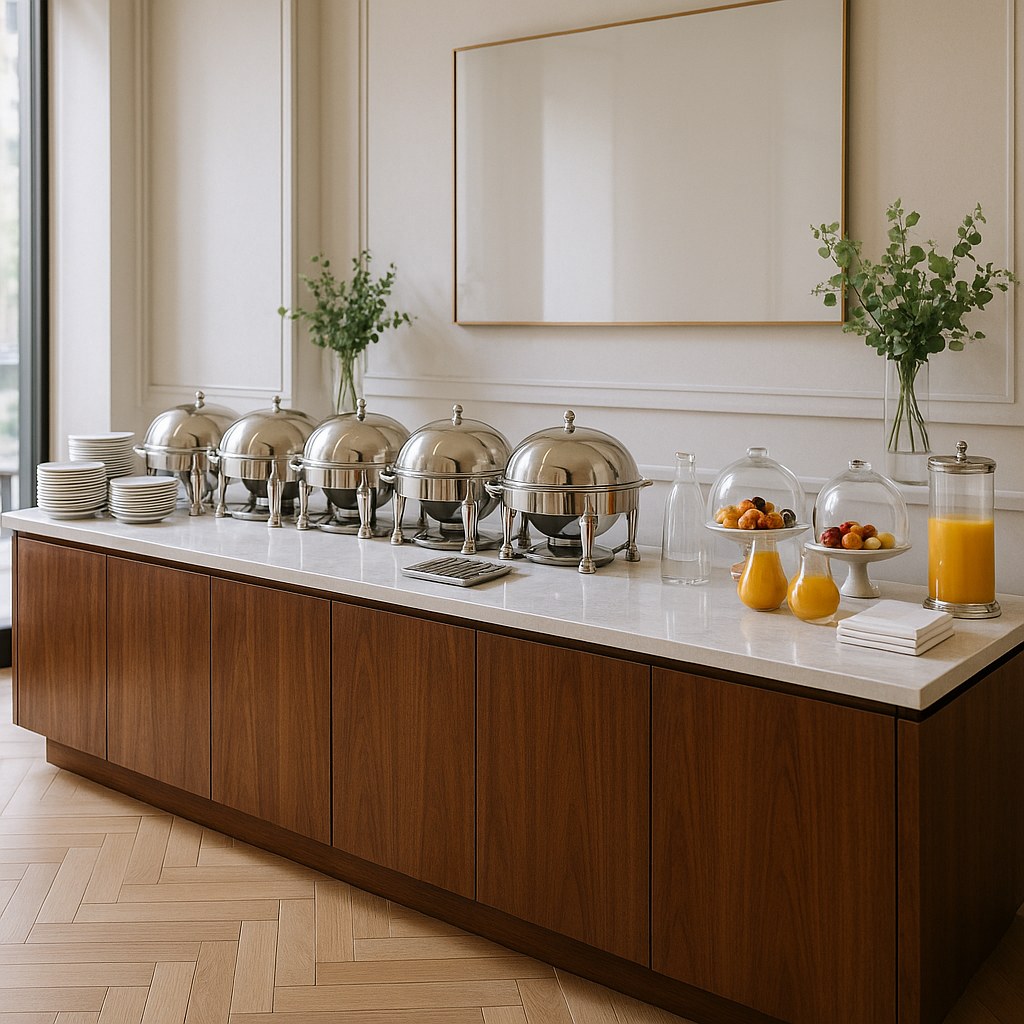
In hospitality the piece goes back to its original job. Buffet sideboards line the wall of a breakfast room, take the chafing dishes and cutlery drawers and hide the working clutter behind closed doors. Here the top has to survive heat and spills, and the doors are opened hundreds of times a week. Projects of that kind run through our hotel furniture and decoration range, with reference interiors on our page for luxury hotel furniture.
Solid timber, painted baroque and contemporary
Our sideboards fall into three groups.
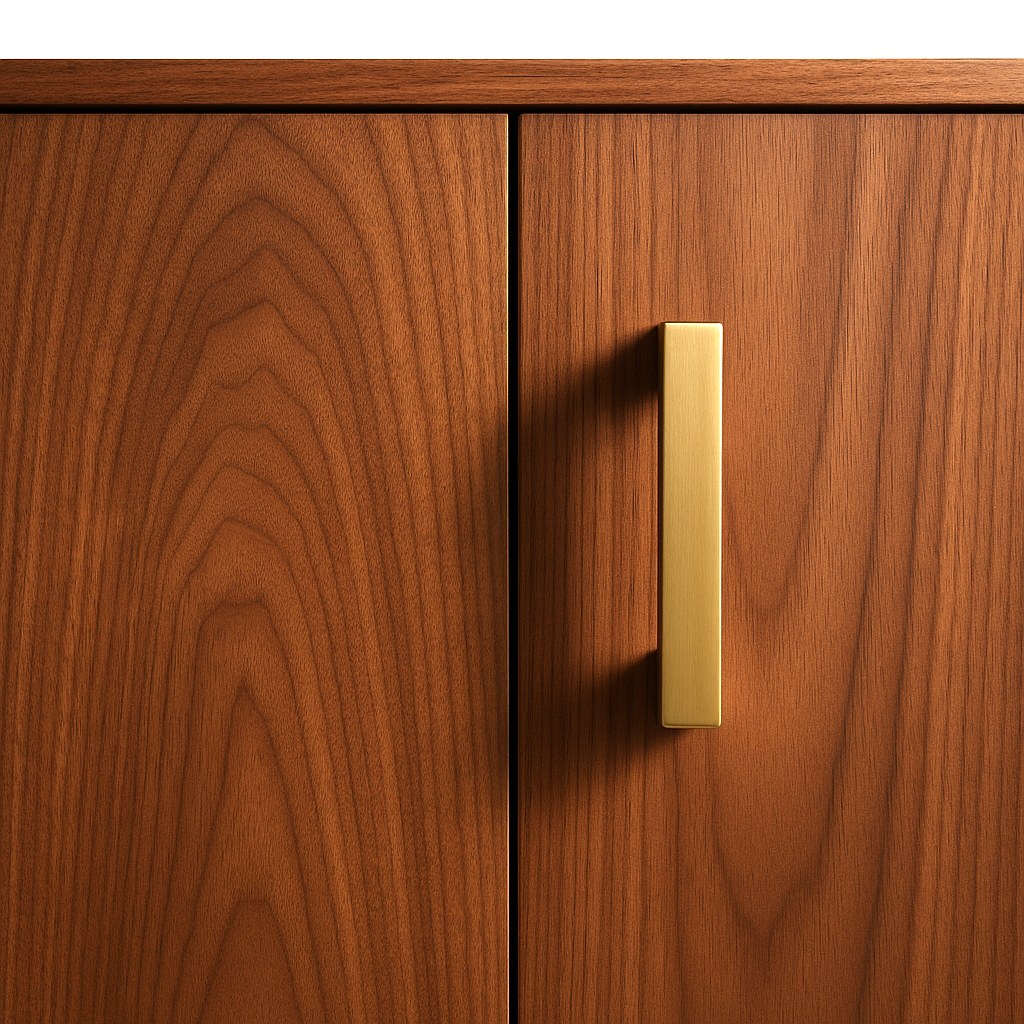
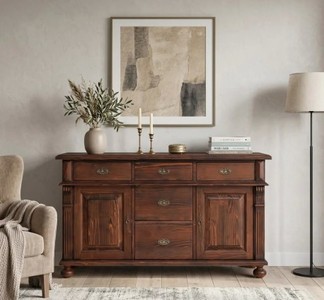
- Solid timber. Mango, acacia, oak and mahogany in natural, waxed or dark stained finishes. The grain is the decoration and the piece gains rather than loses with wear. Solid timber moves with humidity, which is why well made cases use panels that float in their frames.
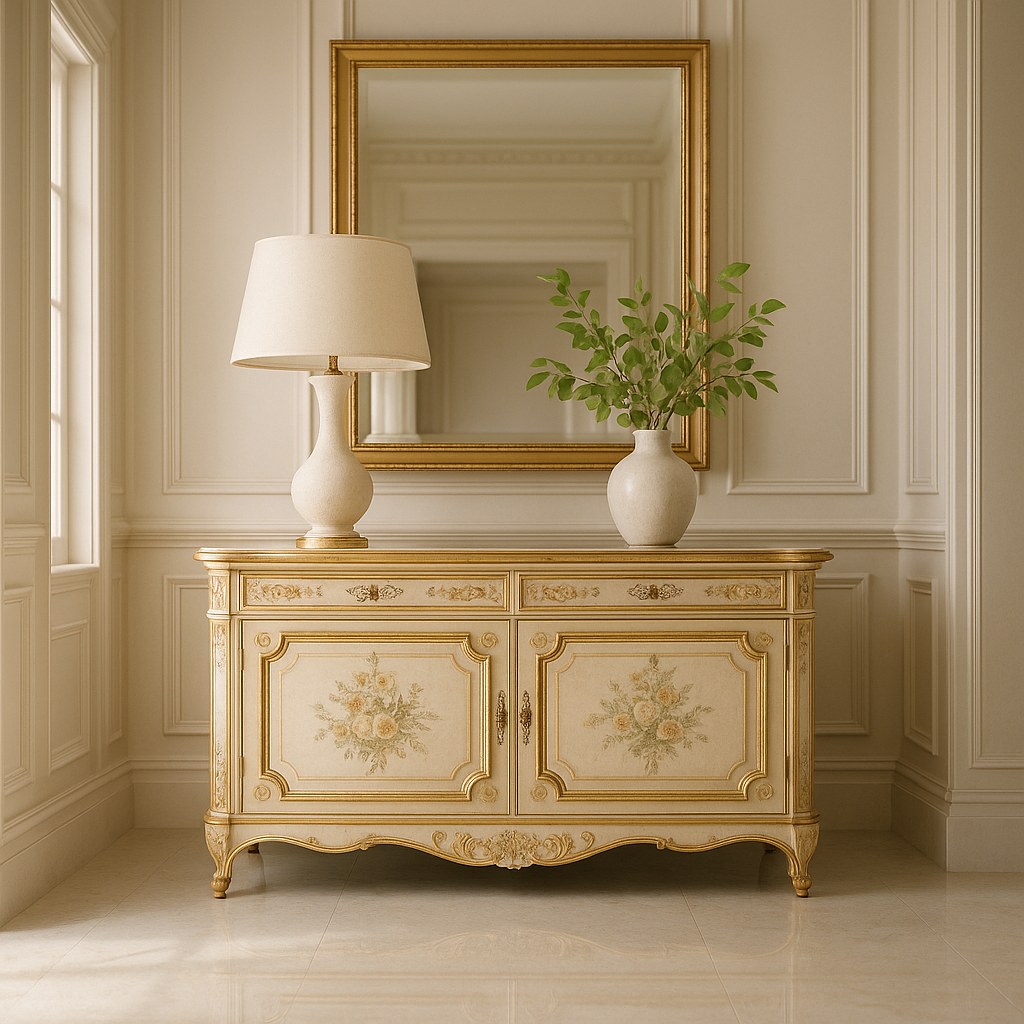
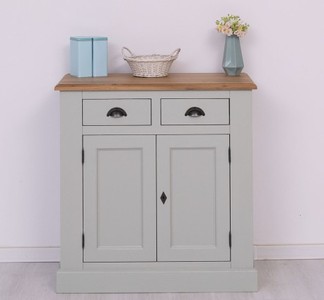
- Hand painted and baroque. Carved fronts, curved sides, painted grounds in white, cream, black or grey, with gilding on the mouldings and antiqued edges. This line descends from the continental tradition rather than the English one, and is made to be the strongest thing in the room.
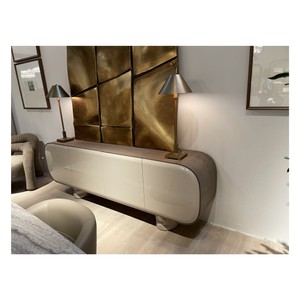
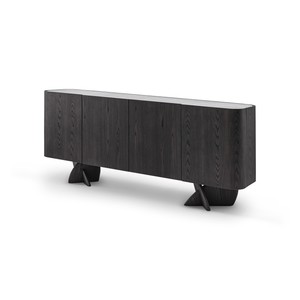
- Contemporary luxury. Long, low and quiet, with high gloss lacquer, stone tops, brass or stainless frames and handleless push to open fronts, for modern architecture where the piece should disappear into a line.
Whatever the line, the same details separate a case that lasts from one that does not: how the drawers are made, whether the back is a fitted panel or a thin sheet pinned on, and whether a long case has a central partition carrying the top. Handles and hinges fail first, so cast handles and adjustable hinges matter more than the finish. Our workshops carve, paint and gild by hand, and build to specification where the catalogue does not hold a length or colour. The full range sits under sideboards.
Measurements: height, depth, length and load
This is where the decision is won or lost. Take these measurements first, and the rest is taste.
Height against use. A serving sideboard wants working height, which puts the top between 80 and 90 cm above the floor, the same band as a kitchen worktop. Below 80 cm you stoop to carve. A media unit wants the opposite. The centre of the screen should sit near seated eye level, roughly 100 to 110 cm above the floor, and a screen of about 65 inches is around 80 cm tall, so the case wants to be 50 to 60 cm. One piece cannot do both jobs well.
Depth against the passage. Most sideboards are 40 to 50 cm deep. In a corridor keep at least 90 cm of clear floor in front of the piece. In a dining room what matters is the distance from the table edge to the front of the sideboard: allow about 75 to 90 cm so a chair can be pushed back and sat in, and 100 to 120 cm where somebody has to walk behind a seated guest. Measure from the table, not from the wall.
Length against the wall and what hangs above. A sideboard should read as if it belongs to its wall, which usually means occupying between half and two thirds of it with wall visible at both ends. Anything hung above should be narrower than the case, roughly two thirds to three quarters of its width, with about 15 to 25 cm between the top and the bottom of the frame. A deep skirting board holds a case 2 to 3 cm off the wall unless the back is notched.
Doors against drawers where space is tight. A hinged door needs its own width of clear floor to open. Where a chair, a radiator or a sofa sits close, drawers, sliding doors or push to open fronts are better, because they need only the pull out depth and no swing.
Load and the span of the top. A solid timber or stone top over a span of 180 cm or more wants support in the middle. A well built long case has a central partition or fixed shelf carrying the top; without one it will bow over the years. Point loads matter more than total weight, so put the heavy object over a partition. The pieces are heavy in themselves: a solid timber sideboard of 200 cm commonly weighs 80 to 150 kg.
Getting it into the building. Most sideboards arrive assembled, so the packed case is what has to travel. Measure the front door, the narrowest turn on the stairs, the lift car and the door of the room itself, then compare against the crate, not the furniture. Where there are children, secure the piece to the wall with a strap or bracket, and on uneven floors use adjustable feet.
Delivery and care
Casa Padrino ships worldwide. Large sideboards travel by freight forwarder with a delivery appointment, smaller pieces go by parcel service. Delivery is made kerbside to the address given; carrying the piece into the building, up stairs, into a lift or into the room where it will stand is not part of the standard service, so please arrange help on site beforehand and check the route before ordering. We do not operate a showroom, so advice is given by telephone and email.
Care is mostly a matter of what to avoid. Wipe solid timber with a barely damp cloth and dry it at once, and refresh wax or oil once or twice a year. Painted and gilded fronts take a dry soft brush only, because water and household cleaners lift gilding and dull an antiqued glaze. Use mats under anything hot or wet, and keep the piece out of direct sun.
Why Casa Padrino
Casa Padrino has grown into one of the internationally known names for baroque, Art Nouveau, Art Deco and contemporary luxury furniture, with customers in more than fifty countries and a catalogue running into thousands of pieces. In May 2025 our designer Marvin Schertl received the International Design Award for Excellence in Luxury Furniture, presented at a gala dinner in Cannes.
For sideboards, three things follow. Depth of range, because close to a hundred models mean a real choice of length, height and finish. Construction described honestly, so that solid timber means solid timber. And the ability to supply the rest of the room from one house, so that the sideboard, the table and the mirror above it belong together. The complete collection is at casa-padrino.de.
Frequently asked questions about sideboards
What is the difference between a sideboard and a console table?
Depth and purpose. A sideboard is 40 to 50 cm deep with doors and drawers and stores a dinner service. A console is shallow, open underneath and decorative.
How high should a sideboard be?
For serving, 80 to 90 cm, the same band as a kitchen worktop. For a television, far lower, so the centre of the screen sits near seated eye level at about 100 to 110 cm.
How much space do I need between the dining table and the sideboard?
Allow about 75 to 90 cm so a chair can be pushed back and sat in, and 100 to 120 cm where somebody has to walk behind a seated guest.
How wide should a mirror or picture above a sideboard be?
Narrower than the piece, roughly two thirds to three quarters of its width, with about 15 to 25 cm between the top of the case and the bottom of the frame.
Is a sideboard the same as a credenza or a buffet?
In practice yes. Credenza is the Italian term, usually a version with plain cupboard doors; buffet is the French one, still used in hospitality.
Are your sideboards solid wood?
Many are, in mango, acacia, oak or mahogany, and each model description states the construction. Others are hand painted cases or contemporary pieces in lacquer, stone or metal, so read the material line.
Do sideboards arrive assembled?
Most arrive as one piece, which is why the transport route matters more than with a bed or a wardrobe. A few larger models have a separate top section.
Can a sideboard hold a heavy stone lamp or a large television?
Yes, if the load sits over a partition rather than the middle of an unsupported span. On cases longer than about 180 cm, look for a central partition carrying the top.
Can you build a sideboard to a given length or colour?
Yes. Our workshops produce bespoke dimensions, finishes and painted or gilded schemes to specification, which is how most hotel and villa projects are supplied.
Do you deliver worldwide, and how?
Yes. Large sideboards go by freight forwarder with a delivery appointment, smaller items by parcel service. Delivery is kerbside to the address given, so please arrange help for carrying the piece into the building.
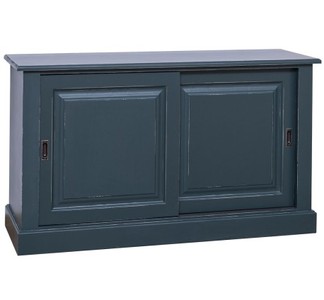
Selected pieces from our collection
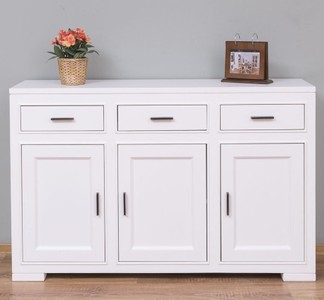

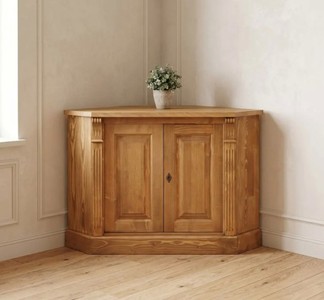
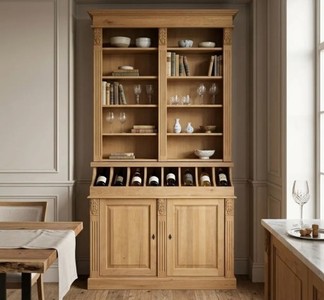
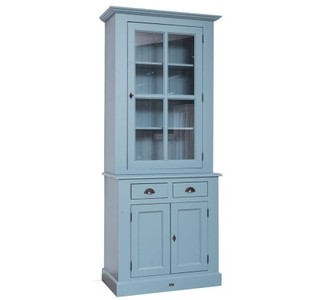
You may also be interested in
Back to the overview: Luxury Furniture for Hotels, Villas & Projects Worldwide